Restore Your Skin’s
Natural Pigment
Naturally
Vitilinox is a precision-formulated supplement designed to support melanocyte activity, reduce white patches, and restore your skin’s natural color from within — backed by science.

Does Vitilinox Work? The Complete 2026 Guide to Vitiligo Skin Support
White patches appearing on your skin without warning — that is what vitiligo does. For many people, the emotional weight of those patches is heavier than any physical discomfort. Finding a product that actually helps feels almost impossible. That is exactly why Vitilinox is gaining serious attention in 2026. It is a natural skin support formula targeting the root-level challenges of vitiligo-affected skin. But does it deliver? This guide gives you an honest, fully detailed answer.
What Is Vitilinox and How Does It Work?
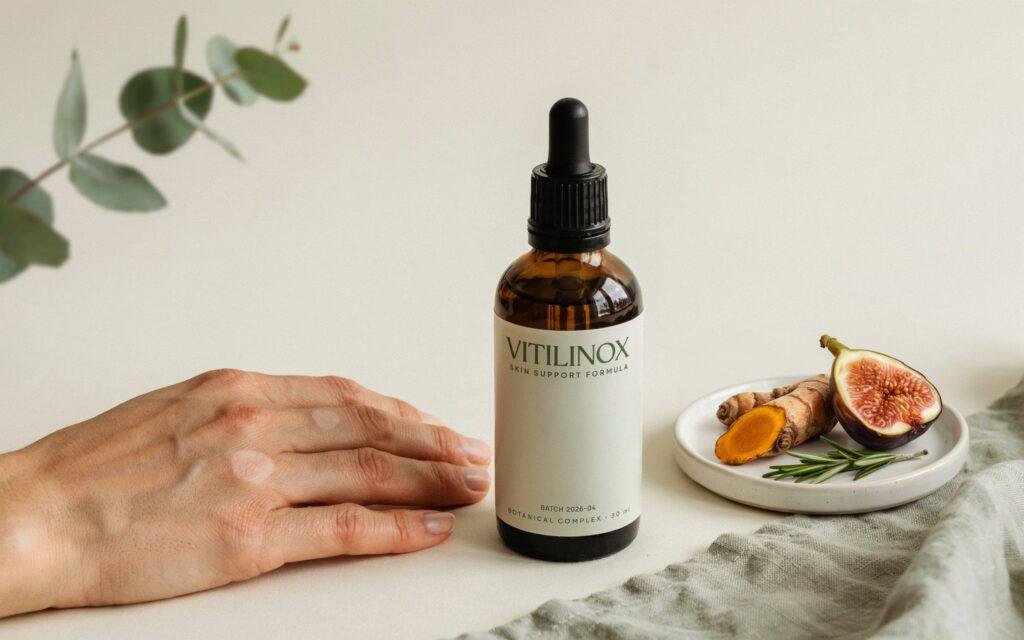
Vitilinox is a topical skin support product — and in some formulations, an oral supplement — created specifically for people managing vitiligo. It combines plant-based extracts, antioxidants, and nourishing compounds aimed at supporting melanocyte health and encouraging a more balanced, even skin tone over time.
The formula targets three key areas:
- Antioxidant protection — Neutralising free radicals that damage pigment-producing skin cells
- Skin barrier reinforcement — Supporting moisture retention and reducing dryness around depigmented patches
- Melanocyte support — Providing nutrients and botanical compounds associated with melanin pathway function
Vitilinox is not a pharmaceutical drug, and it carries no FDA approval as a vitiligo cure. It sits firmly in the complementary skincare category — something used alongside, not instead of, medical treatment prescribed by a dermatologist.
What Are 5 Symptoms of Vitiligo? Know the Signs Early
Identifying vitiligo early matters. The sooner you understand what you are dealing with, the sooner you can build a care plan — whether that includes clinical treatment, daily skin support, or both.
Here are the five core symptoms:
1. White or Light-Coloured Skin Patches Smooth, flat depigmented patches appear where melanocytes have stopped producing melanin. According to the Mayo Clinic, these patches typically begin on the hands, forearms, feet, and face — areas with frequent sun exposure.
2. Premature Greying of Hair Vitiligo can affect hair follicles, causing early greying on the scalp, eyebrows, eyelashes, and beard. This can occur even in people in their twenties.
3. Heightened Sensitivity to Sunlight Skin without melanin has reduced natural UV protection. Affected areas burn faster and feel more uncomfortable under direct sunlight than surrounding pigmented skin.
4. Patches Around Body Openings The condition frequently develops around the mouth, eyes, nose, navel, and genital region — a pattern referred to as acrofacial or mucosal vitiligo by dermatologists.
5. Colour Loss Inside the Mouth or Nose In some individuals, the mucous membranes lose pigment. This is less common but is something a dermatologist checks during a clinical examination using a Wood’s lamp.
What Are the Causes of Vitiligo? The Science Explained
Vitiligo does not have a single, definitive cause. Research from the National Institute of Arthritis and Musculoskeletal and Skin Diseases (NIAMS) and published peer-reviewed literature consistently points to a combination of the following factors:
Autoimmune Dysfunction In the majority of cases, the immune system mistakenly identifies melanocytes as foreign and destroys them. This is the central mechanism in non-segmental vitiligo — by far the most common type, accounting for up to 90% of cases.
Genetic Predisposition Between 20% and 30% of people with vitiligo have at least one family member with the condition. Research published in the NIH’s PubMed Central (PMC) identifies several immune-regulating genes that raise susceptibility.
Oxidative Stress When the body cannot neutralise free radicals fast enough, the resulting oxidative imbalance creates a damaging environment for melanocytes. This is one reason why antioxidant-focused products generate interest in vitiligo skin care circles.
Neurochemical Signals In segmental vitiligo — which affects one body segment and tends to be more stable — nerve-based chemical signals appear to trigger localised melanocyte loss.
Environmental and Emotional Triggers Physical illness, significant emotional stress, chemical exposure, and even sunburn have been documented as triggers that activate vitiligo in genetically predisposed individuals. Managing these triggers is part of any responsible care plan.
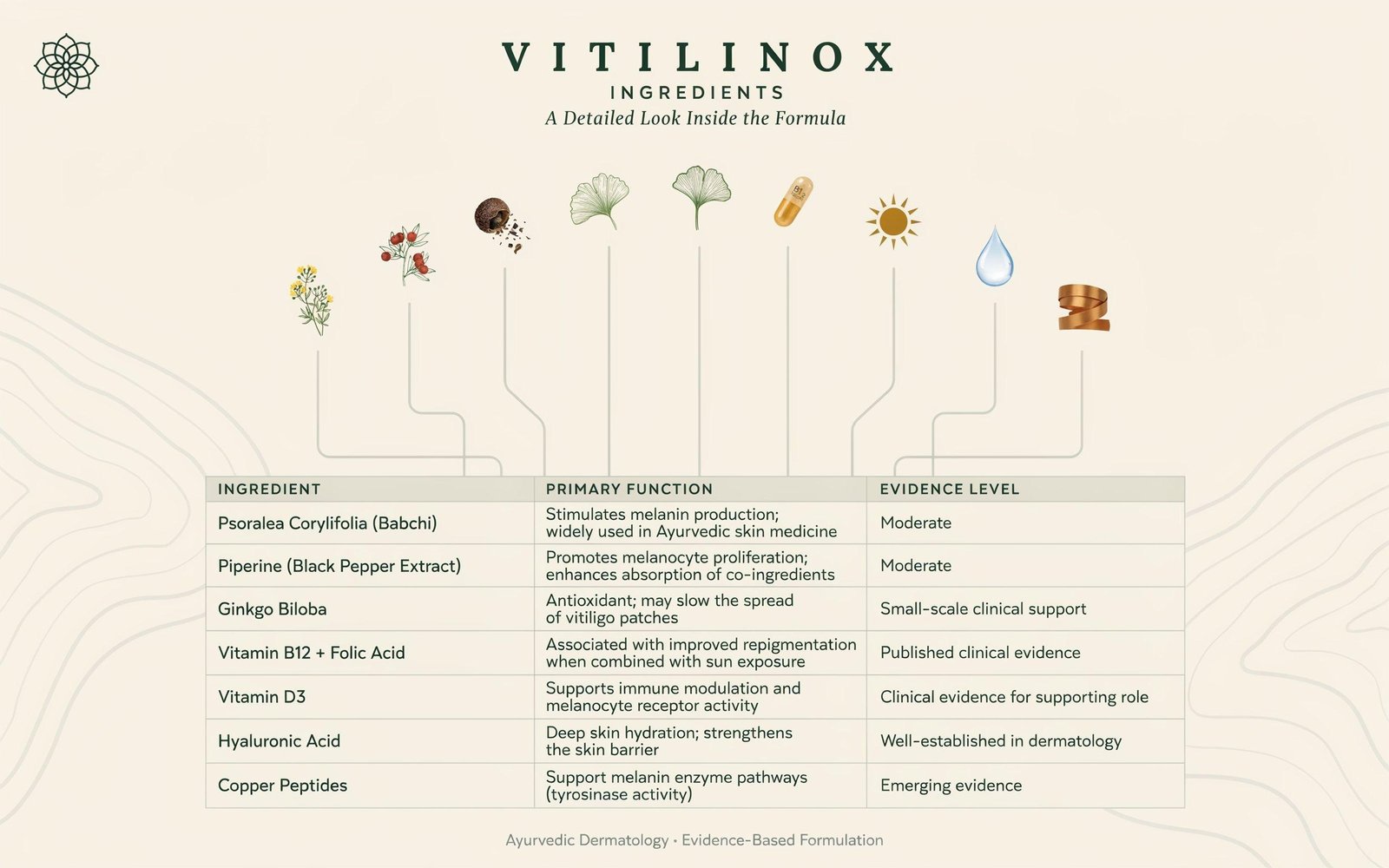
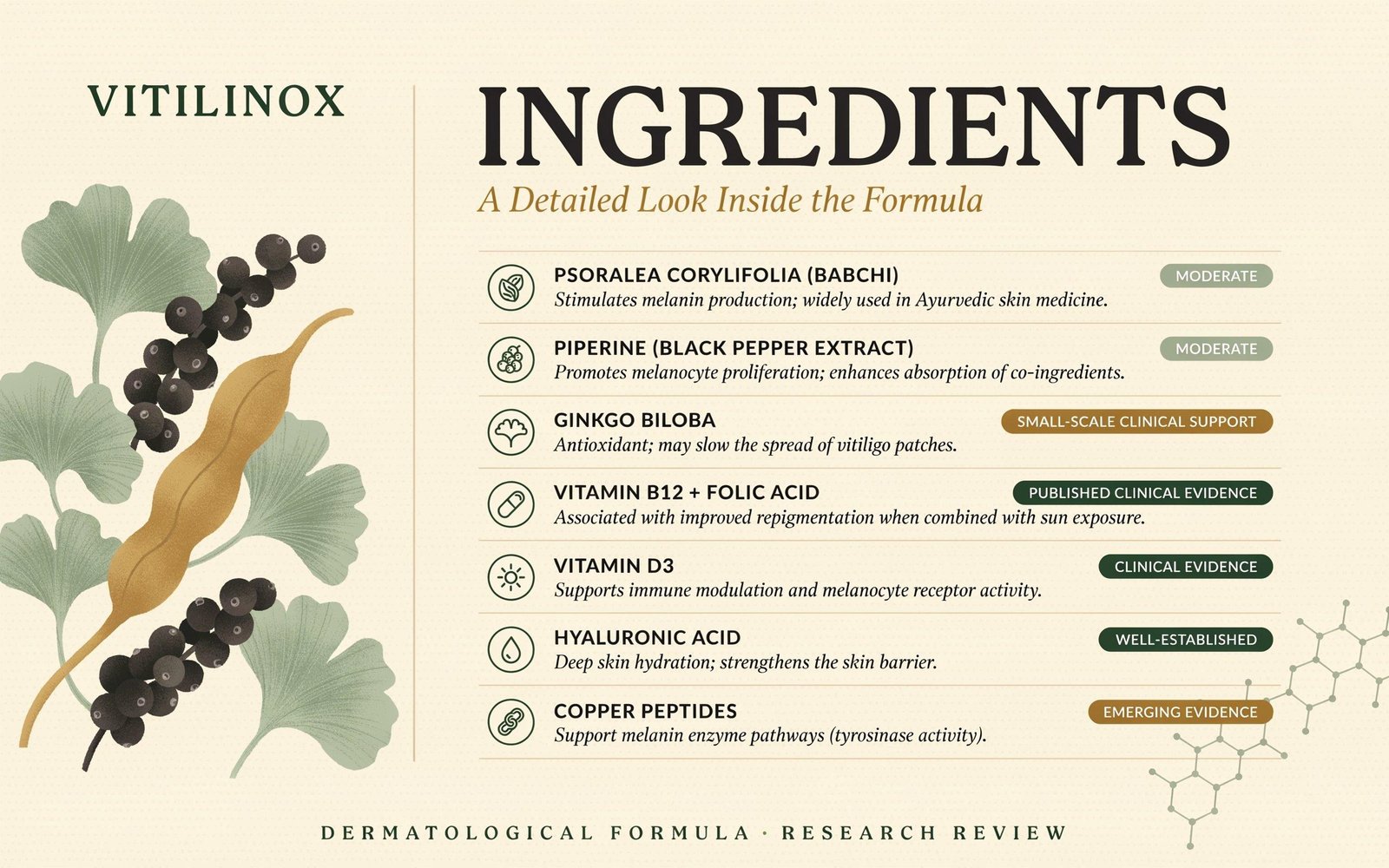
Vitilinox Ingredients: A Detailed Look Inside the Formula
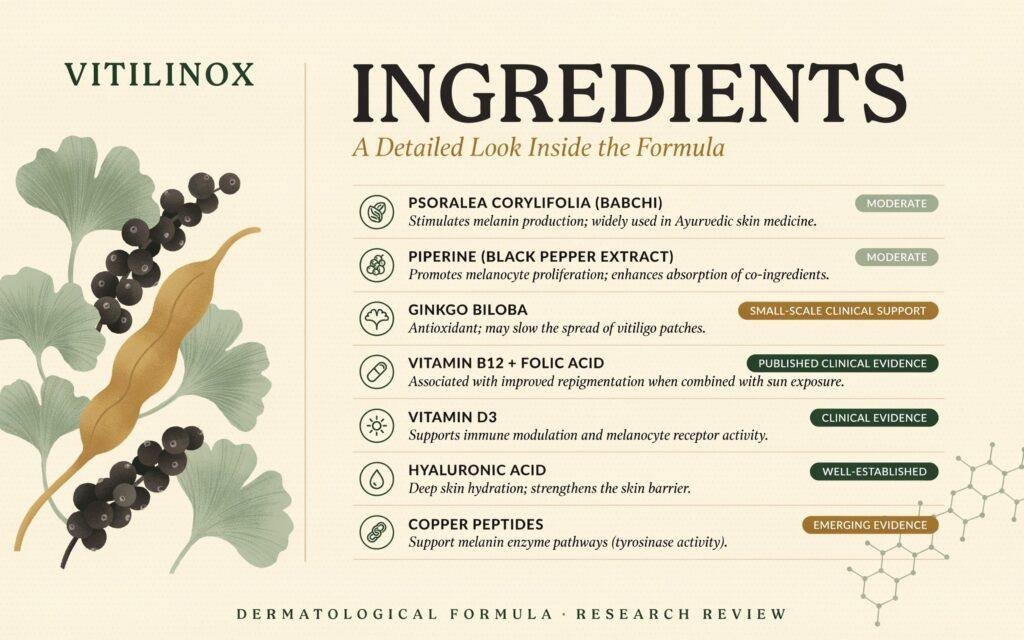
The ingredient profile of Vitilinox varies across brands, but the commonly associated components include well-studied botanical and nutritional compounds. Here is a detailed breakdown:
| Ingredient | Primary Function | Evidence Level |
|---|---|---|
| Psoralea Corylifolia (Babchi) | Stimulates melanin production; widely used in Ayurvedic skin medicine | Moderate — traditional use with some clinical backing |
| Piperine (Black Pepper Extract) | Promotes melanocyte proliferation; enhances absorption of co-ingredients | Moderate — studied in topical vitiligo applications |
| Ginkgo Biloba | Antioxidant; may slow the spread of vitiligo patches | Small-scale clinical support |
| Vitamin B12 + Folic Acid | Associated with improved repigmentation when combined with sun exposure | Published clinical evidence |
| Vitamin D3 | Supports immune modulation and melanocyte receptor activity | Clinical evidence for supporting role |
| Hyaluronic Acid | Deep skin hydration; strengthens the skin barrier | Well-established in dermatology |
| Copper Peptides | Support melanin enzyme pathways (tyrosinase activity) | Emerging evidence |
The individual ingredients — particularly babchi, ginkgo biloba, piperine, and the B vitamin complex — carry their own published research. The Vitilinox formula as a combined product has not been evaluated in large-scale independent clinical trials, which is an important distinction to note.
Vitilinox Reviews: What Real Users Report in 2026
People who use Vitilinox tend to share consistent themes across their feedback, both positive and measured.
What users report positively:
- Noticeable skin hydration improvement within the first 2–4 weeks of consistent use
- Reduction in dryness and flaking around depigmented patches
- Greater sense of control over their daily skin care routine
- Some long-term users (6+ months) report the appearance of small pigment dots or freckling within white patches — a sign potentially linked to melanocyte activity
What users identify as limitations:
- Colour change results vary considerably from person to person
- The process is slow — meaningful skin changes, if they occur, take at least 3–6 months of daily application
- The product requires long-term, consistent use to observe any cumulative effect
- No clinical guarantee of repigmentation
Vitilinox reviews from 2026 paint a clear picture: it performs well as a skin hydration and antioxidant support product. Users who approach it as part of a broader vitiligo management routine tend to report the most satisfaction. Those expecting a cure typically feel let down.
Does Vitilinox Work? An Honest, Evidence-Based Assessment
This is the question that matters most.
The direct answer: Vitilinox works as a skin support, hydration, and antioxidant product. Several of its core ingredients have research behind them that supports a role in vitiligo management. Its antioxidant components may help protect remaining melanocytes from oxidative damage — which is a genuine, evidence-backed mechanism.
What Vitilinox does not do: It does not suppress the autoimmune attack on melanocytes. That is what pharmaceutical treatments are designed to address. Ruxolitinib cream (brand name Opzelura) received FDA approval in 2022 as the first topical treatment specifically indicated for repigmentation in non-segmental vitiligo, and it works through a fundamentally different mechanism — JAK inhibition — than anything in a natural supplement.
The most accurate framing: Vitilinox belongs in the complementary care category. It may support skin health, reduce surface-level oxidative stress, and keep skin feeling healthy and comfortable. It is not a replacement for dermatologist-led treatment.
Vitilinox vs. Conventional Vitiligo Treatments: Full Comparison Table
| Factor | Vitilinox | NB-UVB Phototherapy | Ruxolitinib Cream (Opzelura) |
|---|---|---|---|
| Category | Natural skin support | Medical phototherapy | FDA-approved prescription topical |
| Mechanism | Antioxidant + botanical support | UV-triggered melanocyte stimulation | JAK inhibitor — immune modulation |
| FDA Approved | No | Not as a device category | Yes (2022, ages 12+) |
| Prescription Required | No | Clinic referral needed | Yes |
| Side Effects | Minimal; low risk profile | Mild UV sensitivity | Acne, upper respiratory infections |
| Time to See Results | 4–12 weeks (hydration); months for pigmentation | 6–12 months | 24–52 weeks significant repigmentation |
| Cost | Moderate; accessible | High (clinic visits) | High (prescription pricing) |
| Use at Home | Yes — daily topical routine | No | Yes — twice daily cream |
| Best Suited For | Daily skin support, complement to treatment | Active, widespread vitiligo | Confirmed non-segmental vitiligo |
How Can I Reduce My Vitiligo? 7 Proven Steps
No single approach guarantees complete reversal. What works is building a structured, multi-layer plan with your dermatologist at the centre of it.
Step 1 — Confirm the Diagnosis Before adding any product or protocol, get a clinical diagnosis. A Wood’s lamp examination or skin biopsy distinguishes vitiligo from tinea versicolor, pityriasis alba, and other conditions that look similar.
Step 2 — Apply SPF 50+ Sunscreen Every Day Depigmented skin lacks natural UV protection. Daily broad-spectrum sunscreen prevents burning, reduces the visual contrast between affected and unaffected skin, and protects remaining melanocytes from UV-induced damage.
Step 3 — Explore Narrowband UVB Phototherapy Yale Medicine and the American Academy of Dermatology consistently list narrowband UVB (NB-UVB) phototherapy as one of the most effective treatments available. Sessions two to three times weekly, sustained over several months, can stimulate meaningful repigmentation in many patients.
Step 4 — Use Medical Topicals Under Guidance Topical corticosteroids, calcineurin inhibitors, and ruxolitinib cream each have documented efficacy for different vitiligo profiles. A dermatologist matches the right option to your situation.
Step 5 — Support Melanocyte Health Through Diet Nutrients that support melanin production include zinc, copper, vitamin B12, vitamin D3, and folate. Foods like lentils, almonds, pumpkin seeds, eggs, spinach, and oily fish supply these regularly.
Step 6 — Actively Manage Stress Chronic stress is a documented vitiligo trigger. Sleep, structured physical movement, and reducing prolonged psychological pressure support immune balance and reduce flare frequency.
Step 7 — Add Topical Skin Support to Your Daily Routine A product like Vitilinox fits naturally into the daily care side of vitiligo management — keeping affected skin hydrated, delivering antioxidant protection, and making the routine feel more intentional.
Which Medicine Is Best for Vitiligo? A Clear Overview
The right medicine depends on your vitiligo type, how much skin is affected, where the patches are, your age, and whether the condition is actively spreading. Here is a factual overview of what is currently available:
Topical Treatments
Ruxolitinib Cream (Opzelura) Currently the only FDA-approved topical specifically indicated for non-segmental vitiligo repigmentation. Applied twice daily. Clinical trials demonstrated measurable improvements in facial and total body Vitiligo Area Scoring Index (VASI) at both 24 and 52 weeks. Approved for patients aged 12 and older.
Topical Corticosteroids First-line prescription option for early-stage or small-area vitiligo. Effective short-term but carry risks including skin thinning, stretch marks, and atrophy with prolonged use. Not suitable for long-term continuous application.
Calcineurin Inhibitors (Tacrolimus / Pimecrolimus) Non-steroidal prescription options frequently used on the face and neck where corticosteroid use carries added risk. Carry a lower side effect profile and can be used for longer periods.
Phototherapy
Narrowband UVB (NB-UVB) The standard of care for widespread vitiligo. Multiple systematic reviews support its effectiveness. Delivered in clinical settings two to three times weekly. Combining NB-UVB with topical ruxolitinib has shown enhanced outcomes in recent clinical practice evidence from 2025.
Surgical Options
Melanocyte Transplantation Considered for stable vitiligo that has not responded to medical treatment. A dermatologist harvests melanocytes from unaffected skin and places them in depigmented areas. Effective for localised, stable patches.
Emerging Therapies (2025–2026)
Oral JAK inhibitors such as baricitinib and upadacitinib are in late-phase clinical trials for systemic vitiligo cases. Afamelanotide, an MSH analogue, is also in development. These may expand treatment options significantly in the next few years.
Note: Vitilinox is not a medicine in the pharmacological sense. It is a skin support complement — not a substitute — for any of the treatments above.
How to Use Vitilinox for Best Results
Consistency and realistic expectations are the two most important factors in getting value from Vitilinox.
Daily routine:
- Cleanse first — Wash affected skin with a gentle, pH-balanced cleanser. Pat dry rather than rubbing.
- Apply Vitilinox to the patch — Use a fingertip amount on each affected area. Massage in slow, circular motions until fully absorbed.
- Follow with SPF in the morning — Always layer broad-spectrum SPF 50+ over the product in daytime use. Depigmented skin needs sun protection.
- Use twice daily without skipping — Morning and evening application maintains consistent antioxidant and hydration support across the skin.
- Document your progress monthly — Photograph affected areas under the same lighting each month. Progress in vitiligo skin care is slow; photos provide objective reference.
- Keep your medical treatment going — If your dermatologist has prescribed phototherapy or a topical medication, continue that in parallel. Vitilinox sits alongside a treatment plan, not above it.
Is Vitilinox Safe? Side Effects and Who Should Take Care
For most users, Vitilinox carries a low risk profile. Its plant-based formulation avoids the systemic or steroidal compounds that generate concern in pharmaceutical vitiligo treatments.
Potential side effects to watch for:
- Mild skin redness or sensitivity during initial applications — typically resolves within a few days
- Babchi (Psoralea corylifolia) can cause photosensitivity in some individuals; avoid prolonged sun exposure immediately after application
- Keep the product away from the eyes and mucous membranes unless directed otherwise on the product label
Consult a doctor before using Vitilinox if you are:
- Pregnant or breastfeeding
- Currently using prescription topical treatments for vitiligo
- Known to have allergies to plant extracts, particularly members of the legume or Fabaceae family
- Under 12 years of age
No serious adverse events appear in available user feedback or published reviews of Vitilinox-type products. The ingredient profile aligns with those generally regarded as safe for topical use in healthy adults.
FAQs: Vitilinox and Vitiligo — Straightforward Answers
Vitilinox Quick-Reference Summary Table
| Question | Answer |
|---|---|
| What is Vitilinox? | A natural topical skin support product for vitiligo-affected skin |
| Is it FDA approved? | No — it is a complementary skincare product, not a pharmaceutical |
| Does it cure vitiligo? | No — no product currently cures vitiligo |
| What does it actually do? | Hydrates, delivers antioxidant protection, and supports melanocyte-adjacent skin health |
| How long to see results? | Hydration: 2–4 weeks; any pigmentation changes: 3–6+ months |
| Is it safe? | Generally yes, for healthy adults; consult a doctor if pregnant, on prescriptions, or under 12 |
| Who should use it? | People seeking daily skincare support for vitiligo-affected areas alongside medical care |
| Where to find it? | Available online; check vitilinox.co.uk and authorised UK/international retailers |
A Final Word: What Vitilinox Can and Cannot Do
Vitiligo deserves honest, straightforward information — not inflated claims or dismissive scepticism. Vitilinox fills a real role for people who want to take an active, daily part in caring for their skin. It hydrates. It protects against oxidative damage. It makes the daily routine of managing vitiligo feel more purposeful.
Some users report gradual pigmentation improvement over time. Many value it purely for the skin comfort and consistency it provides. Both outcomes are legitimate.
If you are researching Vitilinox, use it as part of a plan — not as the whole plan. Book an appointment with a board-certified dermatologist. Understand your vitiligo type. Discuss evidence-based treatments. Then add Vitilinox to your daily routine as a supportive layer that keeps your skin healthy between clinical sessions.
That combination — professional medical guidance plus consistent daily skin care — gives you the strongest foundation for managing vitiligo with confidence.
Sources consulted: Mayo Clinic (mayoclinic.org), American Academy of Dermatology (aad.org), Yale Medicine (yalemedicine.org), National Institute of Arthritis and Musculoskeletal and Skin Diseases — NIAMS (niams.nih.gov), NIH PubMed Central — Treatment Advances in Vitiligo, PMC (pmc.ncbi.nlm.nih.gov/articles/PMC11928143/).
This article is for informational purposes only and does not constitute medical advice. Always consult a qualified dermatologist before starting or changing any vitiligo treatment.